|
OPPORTUNITIES
Join a Photographic Expedition
to the Amzon Rainforest
Purchase Photographic Prints
and Support Our Work
|
Travel and Itinerary
Travel
For participants arriving from out of town, you will by flying into Tucson International Airport. We will recommend a hotel near the airport where we will be able to pick you up on the morning of the first day.
Itinerary
Day 1 (August 15th): Gather in Tucson, AZ for a pre-departure meeting and travel to study site.
We start with a general introduction to the geography of the area, along with a description of our route to the study site and the ecosystems we will see along the way. Our site is 25 miles from the border, due south of the Arizona/New Mexico state line. After a two hour drive to the border in Agua Prieta, we will head east on Highway 2 for about 30 miles before heading down into the Sky Islands of Mexico. From there, we take an inordinately bumpy four wheel drive trail for a couple more hours, crossing creeks, hills, plains, and valleys, before arriving at our study site, Rancho Pan Duro in the Sierra San Luis. We will arrive in time for dinner, for which we will share duties, 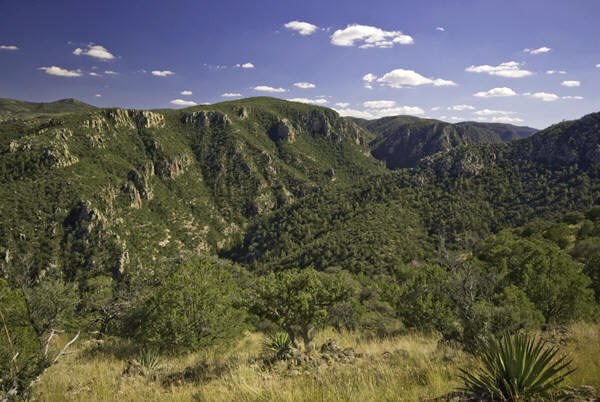 and then have some time off in the evening for socializing and relaxation. and then have some time off in the evening for socializing and relaxation.
Day 2. Introduction to the Sky Islands of Sonora.
We will have some short presentations and discussions about the biology of the herpetofauna of the region, along with some of the conservation issues in the area. Safety will also be thoroughly discussed. We will then go over the ecological methods we will use, and you will try out your skills using visual-encounter surveys. After lunch, time permitting, we will set out and start collecting data on reptiles and amphibians.
Days 3-9: Work days.
Our typical work days will consist of breakfast at 7:00, and hitting the survey areas at about 8:00. We will be mostly running visual-encounter surveys, which consist of walking through habitat, looking for and recording every reptile or amphibian found, and recording numerous bits of information. We will work in teams of 2-4 people, each team led by an experienced herpetologist, who will be catching and handling any venomous snakes encountered.
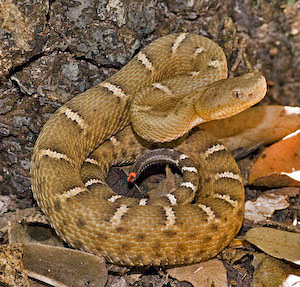
New Mexico Ridge-nosed Rattlesnake
(Crotalus willardi obscurus)
While this will be the typical schedule, we will also have several other activities on some days. You may be able to assist in "processing" snakes, the most common being the New Mexico Ridge-nosed Rattlesnake (Crotalus willardi obscurus). Although our survey efforts will be focused on the main canyon of Rancho Pan Duro, we will also be exploring the mesas and valleys in the surrounding area, where there is even greater potential to see a diversity of herpetofauana.
We will typically work in the field during the hotter parts of the day, until about 5:00 when the sun sets over the edge of the canyon. We will often have some lab work to do in the late afternoon for a couple of participants to help with, but for the most part, the day will be reserved for field work, and there will be time for horseshoes, music, and socializing for the later afternoon and evening.
Day 10 (August 24th): Departure to Tucson
Accommodations at Rancho Pan Duro
We will be staying on a former cattle ranch deep in the foothills of Sierra San Luis. The cattle have been removed from Rancho Pan Duro, and much of the land is recovering from grazing activity (although a few feral cows lurk in the outlying areas). We will be staying at the former ranch house, which includes a full kitchen, bathroom, sleeping quarters, and living area. Running water and electricity are both available. We will be sharing kitchen duties, with prepared hot breakfasts and dinners, and lunches will be bagged.
What To Bring
Essential Items
- Passport. Also keep a color copy of your passport separate from your original.
- Drinking bottle, at least 1 liter capacity
- Any prescription medications
- High-top hiking boots (must cover the ankles completely)
- Day-pack
- Long pants
- Wristwatch
Recommended Gear
- Binoculars
- Sun screen
- Wide-brimmed hat
- Earplugs (for noisy, e.g. snoring, bunkmates)
- Flashlight or headlamp and batteries
|
Mexico Sky Islands
Project Home
Sierra San Luis
Conservation Issues
The Work
Travel
Apply to This Program
|